2026 brings a wind of change: marketing finally moves beyond channel-centric thinking, while the overuse of AI renews a demand for distinctly human content.
AI, SEO, analytics, media, and creativity are no longer separate disciplines – they operate as one connected system, where the human factor becomes a competitive advantage again: expertise, creativity, judgment, and the ability to earn trust.
At mr.Booster, we see this every day through data, experiments, creative performance, and user behavior. And we want to share our observations with you!
#1. Classic Marketing Funnels Are Fading
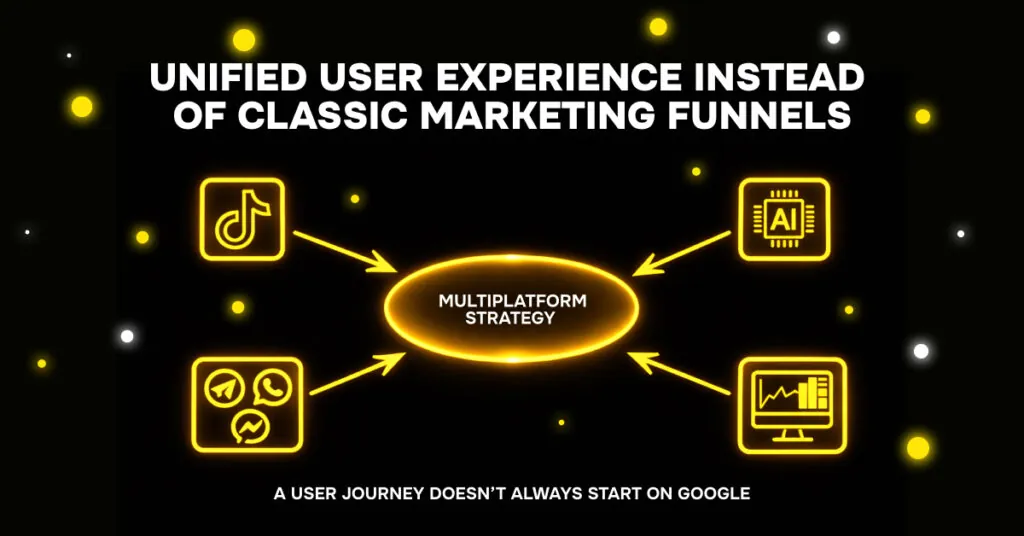
First, we’re seeing a clear shift in user behavior. Users no longer distinguish between channels – paid and organic, social and search. Instead, they move through one continuous information stream, jumping from TikTok to ChatGPT, from messengers to landing pages, and moving between their friends’ and AI models’ recommendations.
The classic linear funnel “from A to B” gradually becomes a thing from the past. Communication between users and brands now happens in parallel across various channels, often even without a website visit – especially when it comes to AI-driven experiences where models may suggest brands directly.
Why this matters: Brands should shift their focus from specific channels to the unified user experience and the impact they make on every touchpoint.
#2. AI Is Cool, but Just a Tool
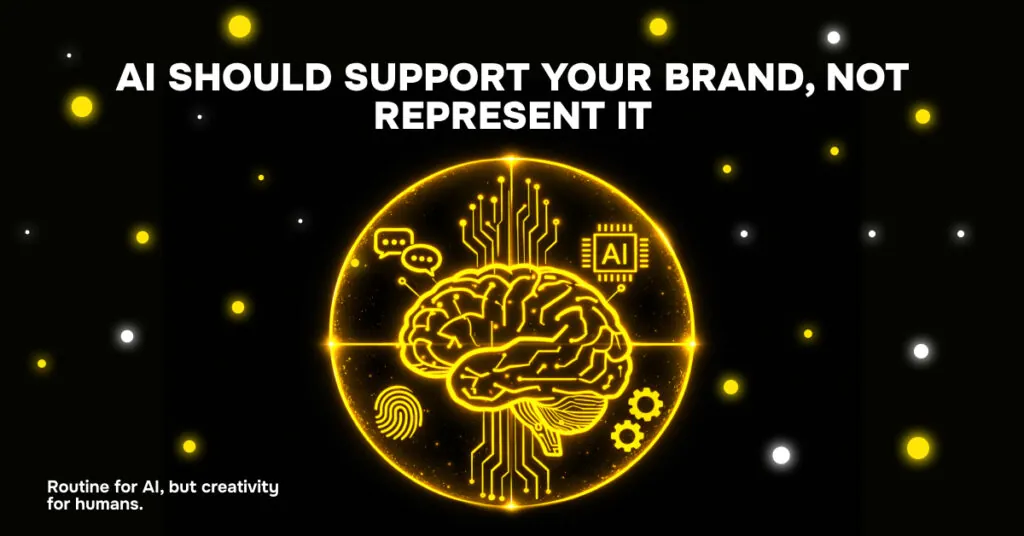
2023-2025 brought the industry not only acceleration, but also saturation: neural networks became so widespread that their fingerprint in texts and visuals started to stand out more than the meaning itself.
In 2026, AI is expected to become the backbone of each marketing department, speeding a lot of processes up, but there’s one thing AI isn’t capable of – it cannot become the face of the brand. It helps analyze data, extract insights, and accelerate, yet it does not replace tone of voice, style, or individuality.
The biggest mistake is trying to automate everything you can: users quickly pick up on that AI sterility, which directly erodes trust.
Why this matters: AI works extremely well as a business tool, simplifying and accelerating processes and routine tasks, but it cannot fully invent or become the brand’s voice. Balance is essential: routine for AI, creativity and emotion – for humans.
Here is what Anastasia Kolmakova, Head of Marketing at mr.Booster, thinks:
“Content with AI or without it is still more a matter of choice and budget. We do test a lot in production, optimize costs, and experiment with formats, but at the same time, for ourselves we choose to balance, using less AI content and more human work.”
#3. SEO 2026 = Ranking + E-E-A-T + AI + Brand Protection
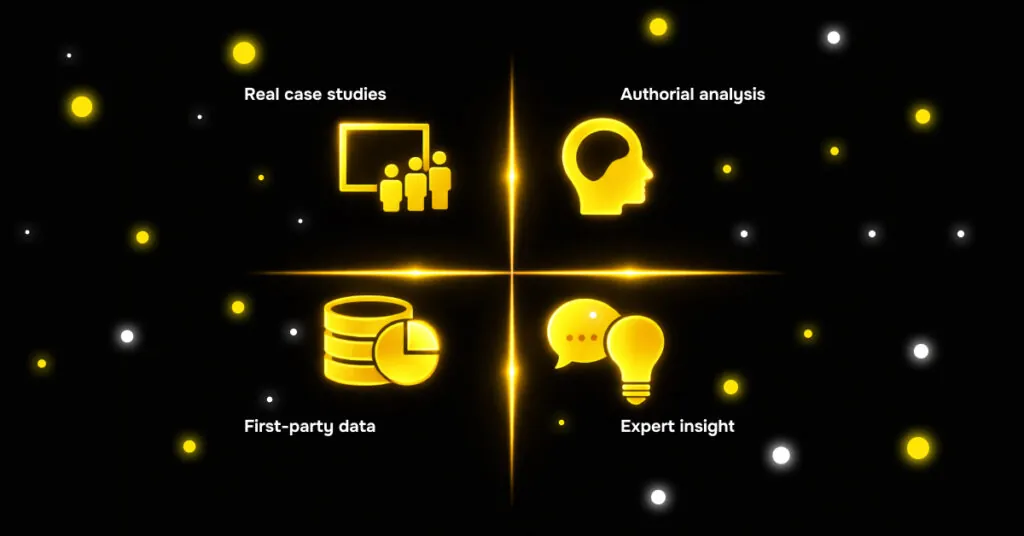
Your ranking still matters a lot, but there are two other crucial layers to add to your SEO strategy: E‑E‑A‑T (experience, expertise, authority, and trust) and generative models.
Now brands not only compete in the SERP, but they also compete in what ChatGPT, Gemini, and Perplexity communicate about them, which also raises the need for solid Brand Protection activities.
Talking about the E-E-A-T principle, it refers to exclusive content that can’t be easily replicated, such as:
- Real case studies
- First-party data
- Authorial analysis
- Expert insight
Modern search itself is increasingly fragmented: discovery starts on TikTok, Reddit, YouTube, and AI chats – not only on Google. This also influences SEO – it becomes a multi-platform discipline, where everything matters: rankings, content, and Brand Protection.
Why this matters: Brands should produce exclusive expert content, which AI cannot generate from scratch. Also, it is recommended to actively manage the sources that reference your brand and the meanings AI systems attach to your name.
And if you need help with Brand Protection, don’t hesitate to reach out to the mr.Booster team and mention ‘Brand Protection.’
#4. Privacy Rises and Data Shrinks, While Retargeting Evolves
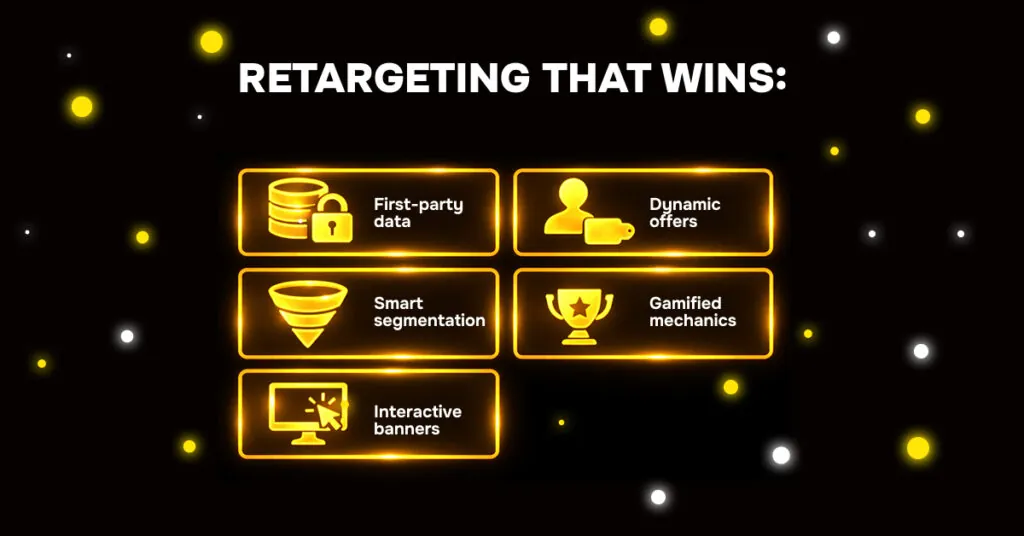
As data policies tighten and tracking becomes more limited, retargeting stays the heart of performance marketing. Why so? Because it’s efficient when intentional and precise.
According to our market observations, growth increasingly comes from:
- First-party data
- Smart segmentation
- Interactive banners
- Dynamic offers
- Gamified mechanics
Why this matters: Retargeting stops feeling intrusive and starts functioning as personalized communication when done right. More good news: it also saves your budget.
Anastasia Kolmakova, Head of Marketing at mr.Booster:
“Based on our data and market demand, it’s clear that retargeting continues to grow. The reason is simple: economics work. Performance alone is no longer enough, brand investment is expensive, and retargeting is increasingly taking a larger share of the media mix.
Reactivating an already-acquired customer for just a few cents isn’t a trend – it’s an operating model.”
And Artem Khomenko, Head of Media Buying at mr.Booster, adds:
“Cookieless retargeting works, especially if you stop treating it as a cookie replacement and start treating it as a privacy-safe architecture. Successful brands connect first-party data, consented identifiers, and contextual signals, then let creative do the heavy lifting. In practice, it’s less about knowing exactly who your user is and more about the intent signal – and what message fits right now.”
#5. The Era of Glossy Content Is Ending
The AI and “perfect content” saturation makes audiences increasingly tired of polished aesthetics. As a result, real, emotional, and imperfect content is gaining momentum: natural speech, honest storytelling, and raw formats are new trends.
Why this matters: Meaning now outperforms visual perfection: content shifts from “looking pretty” to “being true”.
#6. Last Click Is Not Enough to Explain Behavior
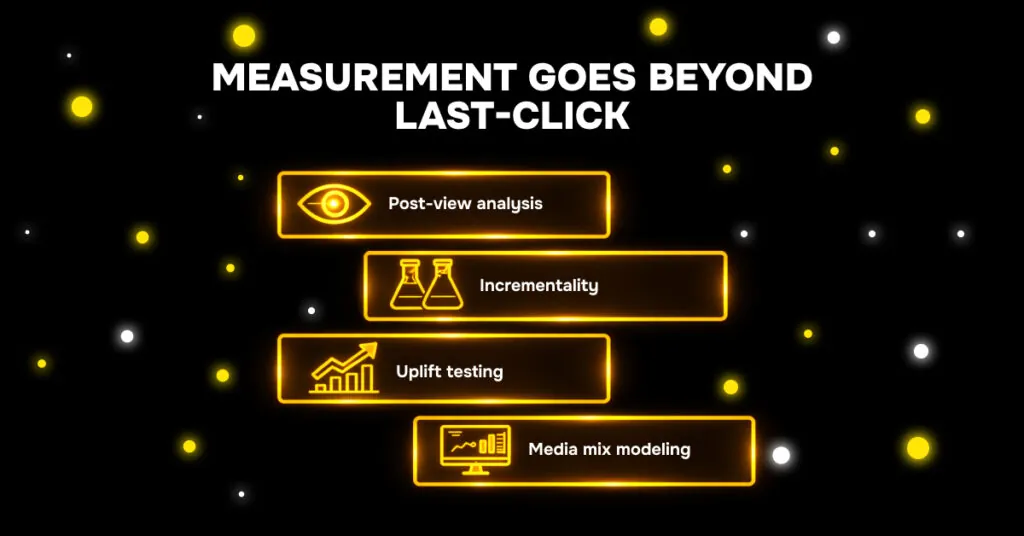
User journeys now stretch across days and platforms: say, they see an ad this morning, recall it in the evening, and make a purchase tomorrow using Google search. This makes last-click attribution insufficient to explain user behavior.
Measurement becomes more advanced and more honest, with greater emphasis on post-view analysis, incrementality, uplift testing, and media mix modeling.
Why this matters: Marketing is not about isolated user actions anymore, but about true influence. Remember we were discussing the impact you make on the entire user journey? This is also the case when you choose what metrics to track. Last-click should no longer remain the king metric, guiding analysis and decisions.
#7. When Tools Bring Equality, Trust Wins
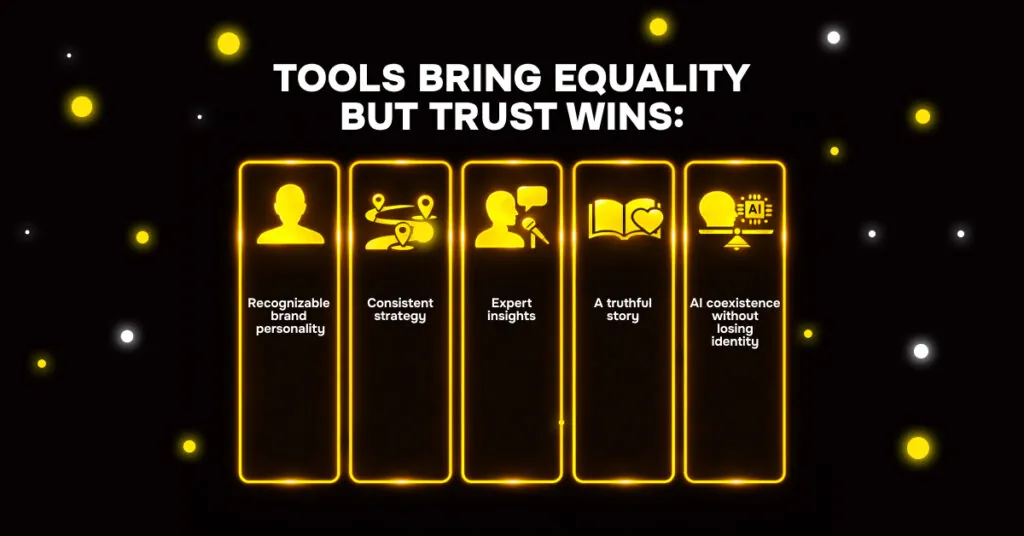
When everyone has access to AI, tools, and data, it’s hard to gain an advantage over your competitors with scaling alone. What really works here is the trust you win from your audience.
How to boost it:
- Create and support a recognizable brand personality
- Have a consistent strategy
- Showcase expertise and make your experts visible
- Bring a truthful story to the table
- Learn to coexist with AI without losing identity
Why this matters: Technology levels the playing field – but human credibility is what creates real difference and competitive advantage.
To Sum Up
So don’t be afraid of AI in 2026 – brands that know who they are, what makes them different, and why they exist make technology work for them, not instead of them. Technology is your acceleration, when you use it right. Keep the balance between humans and algorithms, aim for credible content that feels true, focus on meaningful influence.
Platforms and technologies evolve quickly, but human behavior changes slowly, that’s why brands still have time to adapt.
And if you need help with your next marketing journey – from SEO to brand awareness and efficient retargeting – the mr.Booster team is here for you!