In 2026, brand protection is no longer an issue solved by legal departments only, but something much broader – it’s a visibility, trust, and revenue issue.
Customers do not meet brands in one controlled environment anymore. They see them in search results, social profiles, review platforms, and AI-generated answers. That creates more reach, but it also creates more room for impersonation, misinformation, and abuse.
The diversity of threats is headspinning: a fake website can steal payments or customer data, an unofficial page can intercept branded demand before it reaches your site, while an AI-generated answer can surface outdated, incomplete, or inaccurate information about your brand. Most of these problems start quietly and only become visible after they begin affecting sales, support volume, or customer trust.
What Brand Protection Means in 2026
Brand protection is the work of preventing other parties from misusing your brand identity, misrepresenting your business, or unlawfully profiting from your reputation.
In practice, it has three layers:
- Legal protection: securing trademarks, domains, and other intellectual property rights tied to your brand.
- Operational protection: monitoring for abuse, reporting violations, and removing harmful or misleading assets.
- Representation protection: keeping your brand information accurate and consistent wherever customers encounter it online.
That distinction matters. As we mentioned, trademark registration and other legal rights create a stronger basis for enforcement, but they are only part of the picture. Fake accounts, phishing pages, and inaccurate brand information still need to be identified, reported, and addressed. That’s why effective brand protection combines legal foundations with active monitoring and fast response.
How brands get misrepresented online
Brand misuse does not always look the same. Depending on the channel, it can take various forms:
Branded SERP control
One of the most overlooked brand protection risks is losing control of the branded SERP. If users search you by brand name, but you didn’t manage to secure the branded search results with your official site and supporting pages, then competitors, affiliates and other third-parties can use your brand name to capture the demand created by your own marketing efforts.
In one iGaming case, our team built a SERP-control system around the official site, branded support assets, and daily competitor monitoring. eCPA fell from $60 to $6, while Brand SEO’s share of total acquisition grew to 27.86%.
Review manipulation and reputation attacks
Fake reviews, misleading complaints, or coordinated negative activity can distort how potential customers perceive your business. Even when the claims are false, the impression they create can still affect trust and conversion.
Search and AI misrepresentation
In 2026, customers rely on snippets, business profiles, third-party pages, comparison content, and AI-generated answers. If those surfaces show outdated, incomplete, or inaccurate information, users can form the wrong impression before they ever reach your site.
Trademark infringement and visual imitation
Some companies use names, logos, packaging, or design systems that are confusingly close to established brands. Even when the intent is not an outright scam, the result can still be misleading for customers and affect brand identity.
Unauthorized reuse of brand content
Product descriptions, visuals, landing pages, and comparison content are often copied and republished without permission. That weakens differentiation, creates confusion in search, and places your brand materials in context you do not control.
What weak brand protection actually costs
The most obvious cost is lost revenue. Customers pay a fake website or click a third-party page that pretends to be yours – you lose direct income or repurchase the same warm traffic again.
The second cost is trust. A user who gets scammed through a page using your name usually does not separate the scam from the brand. They remember the bad experience and attach it to you.
Over time, weak brand control also affects performance. If branded search results are polluted, official channels are hard to identify, or market perception becomes inconsistent, conversion rates and long-term brand value suffer.
Brand protection goes beyond avoiding worst-case scenarios – it also helps protect the quality of the customer journey from discovery to purchase.
A basic framework for protecting your brand
Protecting a brand starts with a clear, repeatable system built around a few core steps:
1. Secure the assets your brand depends on
It may sound obvious, but it still matters: register trademarks in your core markets and in markets you plan to enter next. Make sure to secure your main domains, regional variants, and common misspellings. Lock down social handles, executive handles where relevant, and other branded assets people frequently search for.
2. Monitor the places where customers actually meet your brand
Do not rely on broad, unfocused checks. Just occasionally googling your brand name is not enough, you need to monitor the channels and queries that actually shape how customers find and evaluate your brand.
That usually includes:
- Branded search results
- Brand + “official,” “login,” “support,” “reviews,” or “pricing” queries
- Third-party pages ranking on the brand name
- AI tools and answer engines
- Social handles and profile-name variations
- Listings, review sites, and app stores where relevant
Talking about AI-assisted discovery, mind that being mentioned is not the same as being cited – and brands need to monitor both. Run repeatable prompt sets in logged-out or incognito sessions, test with web search both on and off, and document whether the brand appears at all, whether the description is accurate, which competitors are mentioned, and whether official sources are cited. Because AI responses are not deterministic, repeated checks matter more than one-off tests.
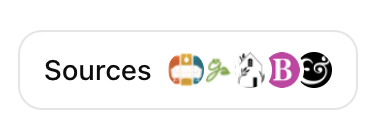
Where ChatGPT search is concerned, brands can also review inline citations or use the Sources panel to see which pages are shaping the answer:
In Google Search, keeping official pages indexed, accurate, and clearly structured matters even more now, because the same SEO fundamentals still apply to AI features in Search. Google also allows site owners to limit what can be shown from a page through controls such as nosnippet, data-nosnippet, max-snippet, and noindex.
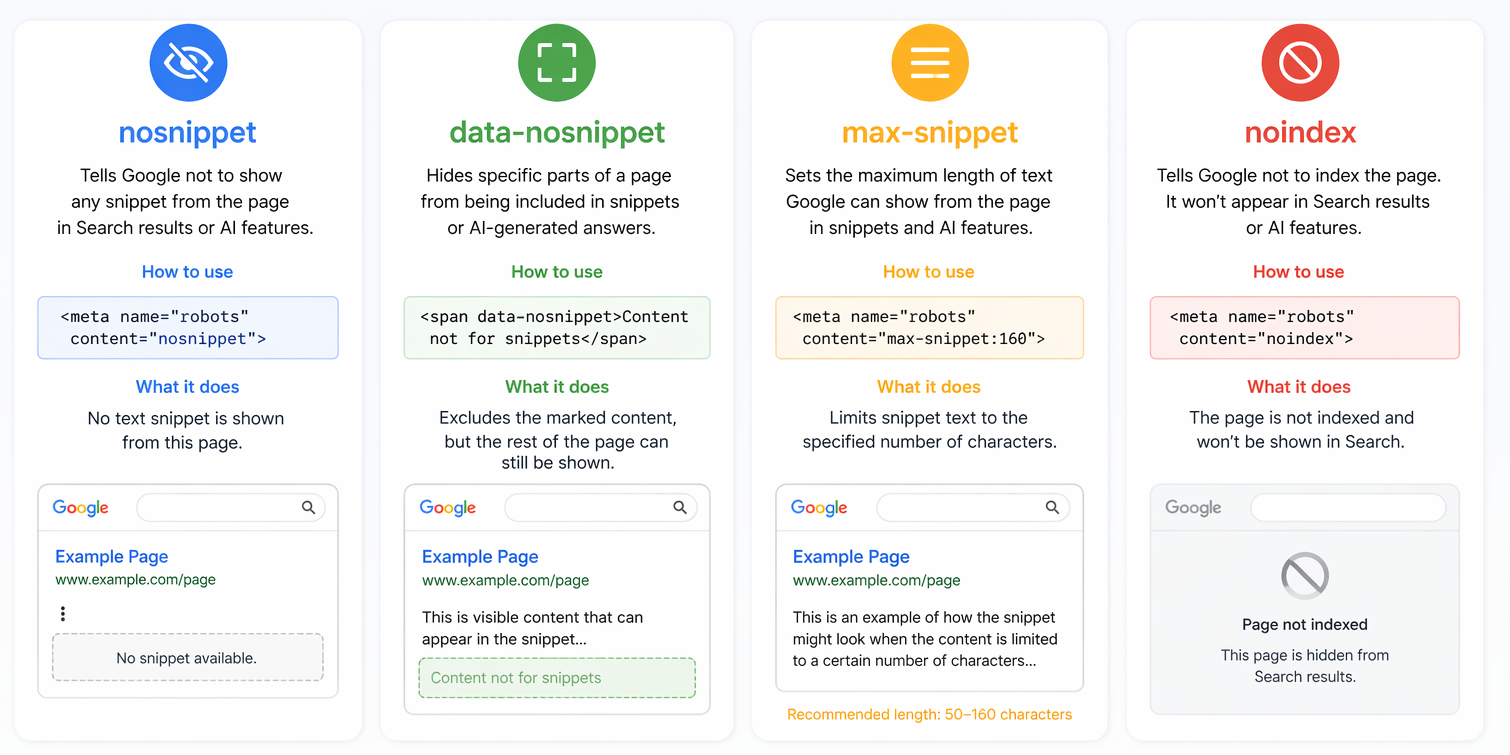
These controls do not solve the whole problem, but they help brands limit how their content is surfaced and reused in search and AI features.
3. Make your official presence easy to recognize
Don’t make your potential customers wonder which website or account is real, so use consistent naming and visuals across major platforms and verify accounts where possible. If you want additional measures, publish a clear list of official websites, handles, and support channels.
4. Build a response workflow before you need one
When a violation appears, speed matters the most. However, it’s hard to react promptly if you don’t have a pre-defined plan.
A basic workflow may look this way:
First, capture the evidence. Save the URLs, screenshots, timestamps, account IDs, and search queries involved. If the case escalates, this record will help you report the violation more effectively and show exactly what was published, where it appeared, and when it was active.
After that, choose the right enforcement route. Platform reports are usually the fastest option for fake accounts, impersonation, misleading listings, or unauthorized content. Hosting providers or domain registrars are more relevant when the issue involves fraudulent websites, phishing pages, or abusive domains. Legal teams typically come in when the case requires formal escalation, repeat-offender handling, or trademark-based enforcement. The route should match both the type of violation and the platform where it appears.
Finally, track follow-up and reappearance. Many violations do not disappear permanently after one report, but oftentimes return in slightly different forms, so it is important to monitor whether the content was removed, whether it reappears elsewhere, and whether further action is needed.
5. Educate customers
Many brands treat customer education as a nice-to-have rather than a core protection layer. Tell users where to find official information, how your company communicates, and what it will never ask for. For example, some banks remind their customers that their representatives would never call them first, asking for sensitive data.
Also, make it easy to report suspicious pages and accounts. A simple reporting path – whether through a website form, help-center link, or dedicated email address – can help surface issues before they spread.
6. Review your risks as the business changes
Whenever you move to new markets, showcase new products, do paid campaign expansion, boost influencer activity, or attract affiliates, new opportunities for misuse arise. Review your exposure regularly and update your monitoring and enforcement priorities as you scale.
When should you start?
Earlier than most teams think! If your brand has a website, social presence, or search demand, it is already exposed and you do not need to be a global company to become a target.
In many cases, smaller brands are easier to exploit because monitoring is informal and channel ownership is unclear.
The right time to take brand protection seriously is usually when one of these things starts happening:
- Branded search volume is growing
- Paid campaigns are increasing brand visibility
- You are entering new GEOs
- Customers start reporting suspicious pages or accounts
- Copied content or unofficial offers begin appearing online
Waiting until a crisis appears usually means reacting under pressure and losing time. Starting earlier allows you to set rules, build monitoring habits, and fix weak points before they turn into revenue or reputation problems.
DIY or professional support?
For some brands, a DIY approach is enough at the beginning. If you operate in one market, have a limited number of channels, and only see occasional issues, your team may be able to handle basic monitoring and straightforward reporting internally.
That changes once the brand grows or the risk surface expands. Professional support becomes more valuable when:
- Violations appear across multiple channels at once
- Brand operates in several markets or languages increasing the number of search surfaces and potential violations
- Affiliates, competitors, or unofficial pages start ranking for branded queries
- Impersonation and similar issues repeat
- No one internally has the time or expertise to own the process consistently
So first of all, you need to identify whether your current setup can detect, prioritize, and remove brand threats at the speed your business needs. If you are not sure, then you definitely need professional outside support.
How mr.Booster helps
At mr.Booster, we know that brand protection goes far beyond a legal clean-up task – it’s a part of a brand’s digital visibility.
We help brands identify where they are vulnerable across search, social platforms, review ecosystems, and other digital environments. We monitor how the brand is represented, surface misleading or unauthorized uses, and support the removal of harmful assets such as fake pages, impersonation profiles, deceptive listings, and third-party pages that capture branded demand, so that your brand would take top positions in search.
The goal is not only to react to incidents. It is to reduce the number of incidents that can happen in the first place.
Final thought
Brand protection in 2026 is a multilayered business-critical issue that affects search visibility, customer trust, platform control, and revenue. Brands that treat it proactively are in a much stronger position to grow without losing control of how they are seen online.
Not sure you can build a strong brand protection strategy yourself? Contact us and we’ll do that for you!