Of course, we all know that brand search in iGaming is a source of really valuable traffic because of its obviously high intent. However, organic non-brand visibility matters long before a player searches for an operator by name.
Naturally, searches for a particular game, provider, or sports topic are an early part of the discovery process, when people are exploring what is available and beginning to form a preference. That is why, ranking for these queries, the brand jumps into this story early and puts itself into consideration, while also creating additional entry points through which new audiences can discover the product. Doesn’t it sound like an opportunity one shouldn’t ignore?
In this case study, you will learn how we made our client, Jabula Bets, visible for relevant non-brand searches around games, providers, and sports content, turning these pages into meaningful organic acquisition touchpoints.
The Starting Point: Limited Visibility Beyond the Brand
Now, let’s start with a brief context and a couple of words about our client and their challenge.
So Jabula Bets is an iGaming brand targeting the South African market in English, with Google as its priority search engine.
At the start of the project in April 2026, the product faced three connected issues:
- no meaningful traffic from generic, non-brand search queries
- weak technical SEO
- no backlink profile for the sections intended to capture relevant non-brand demand (specifically, /game/, /games/ and /sport/)
The key task was to grow organic traffic to the sections mentioned above. In practice, this meant making these pages competitive for thematic and commercial search clusters beyond queries that already included the Jabula Bets brand name.
The Hypothesis
Our project hypothesis was that technical optimization, content expansion, and link building needed to work as a single mechanism to cover non-brand semantic clusters and strengthen the target sections. To do that, our team designed three layers:
- Make the /game/, /games/ and /sport/ sections technically ready for Google
- Expand their relevance with content covering particular games, sports, and providers
- Build a backlink profile around the target sections to strengthen their ability to compete in search
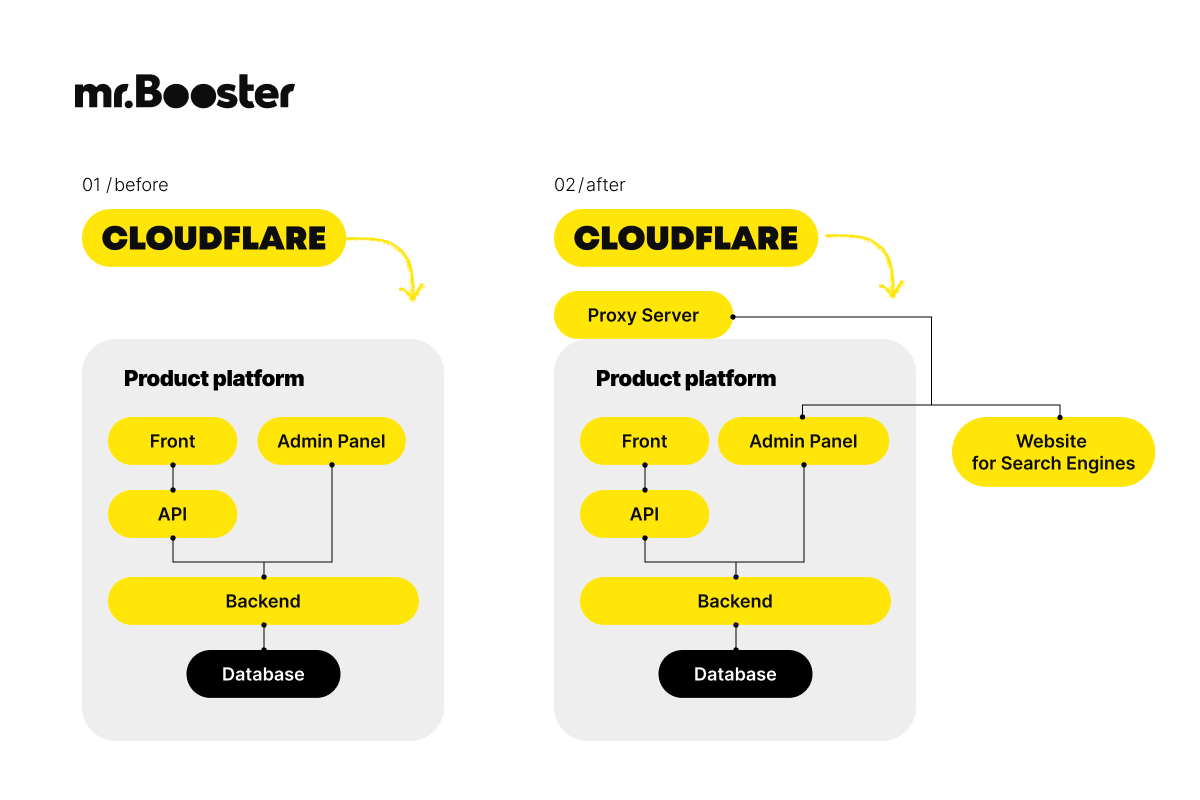
We didn’t change the core codebase of the product platform, but introduced a partial technical SEO integration for the selected sections. The implementation supported technical SEO updates, new content, and structured-data optimization while leaving the core platform untouched. The same approach also created a foundation for adding further sections and pages in the future.
Technical Readiness, Topic Coverage and Authority
Once the technical layer was in place, our SEO team proceeded with content and link building.
Technical SEO and structured data
Technical SEO always comes first, so our team implemented all the necessary improvements to /game/, /games/ and /sport/ sections in the first place. Right after that, we started publishing more content and performed structured-data optimization. All of these tactical moves allowed Google to reassess the pages and gave the team a scalable framework for expanding the site structure later.
Content for non-brand demand
Talking about content in more detail, the team published 273 pieces covering various topics about games, sports, and providers. And this move exactly expanded the semantic coverage of the target sections for non-brand topics.
Link building for the target sections
The link-building strategy secured more than 2,500 backlinks through placements in industry publications and niche blogs, as well as relevant community discussions.
Of these placements, 146 were guest posts. Rather than treating links as a standalone activity, the team used them to support the same sections that were receiving technical and content work.
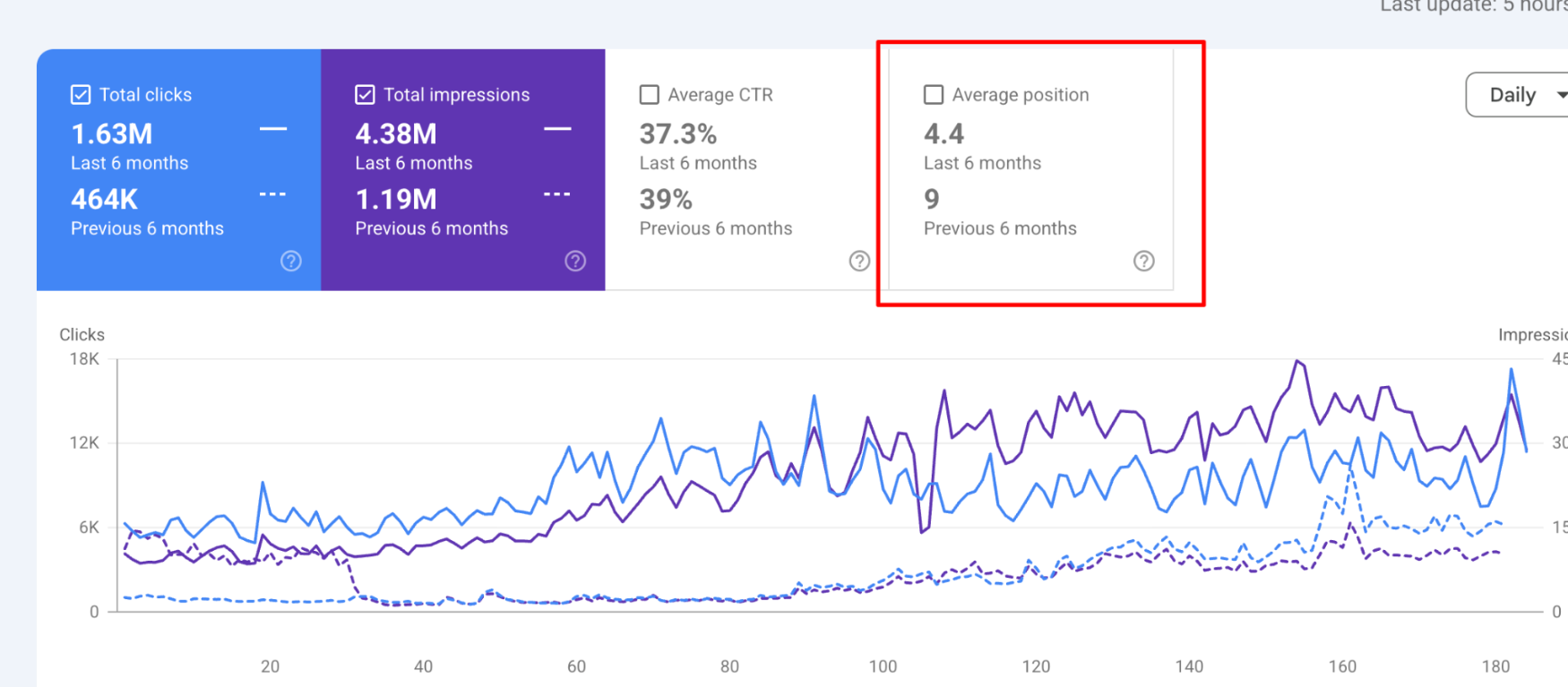
Daily monitoring and adjustment
Our team monitored performance daily throughout the project and rapidly adjusted the strategy as the target sections developed in search.
Results: Non-Brand Clicks Grew 15x
The clearest outcome is the growth in non-brand clicks from the three target areas. The number rose from 659 in April to 9,919 in August, an increase of 1,405.2%.
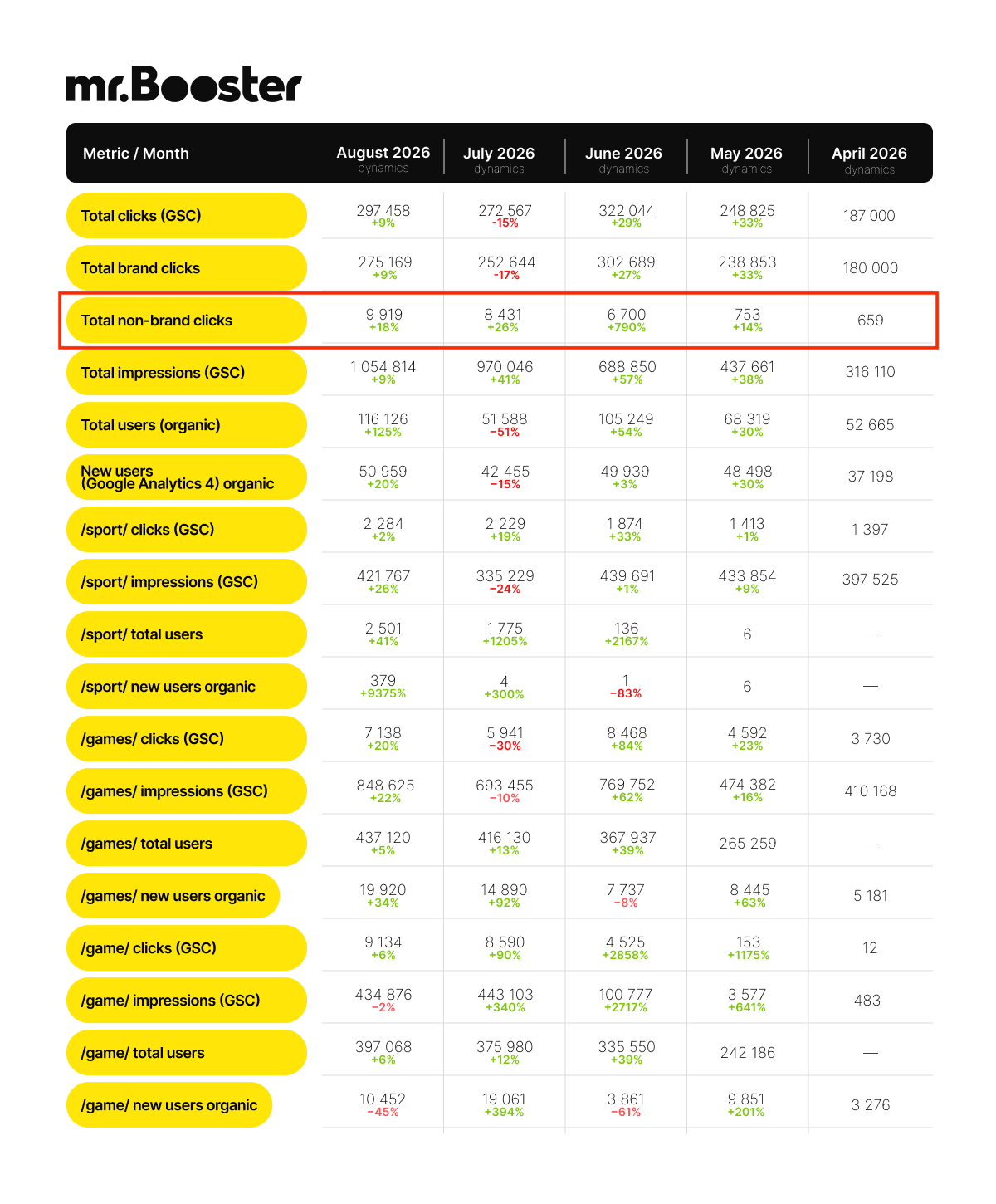
The strongest acceleration came in June, when non-brand clicks rose from 753 to 6,700. Crucially, this was not a single-month spike: the figure continued to grow in July and August, reaching 9,919 by the end of the reporting period.
At directory level, Google Search Console data also showed higher click volumes across all three focus areas (April 2026 – August 2026):
- /sport/ – 1,397 → 2,284
- /games/ – 3,730 → 7,138
- /game/ – 12 → 9,134
All three target directories recorded higher GSC click volumes by August, while the non-brand metric captures the campaign’s primary objective.
What This Case Shows
The Jabula Bets case demonstrates that non-brand SEO involves more than adding pages for generic keywords. The project brought together a technically viable foundation, content coverage for target topics, and link building around the same sections.
For this project, the approach moved non-brand clicks from 659 to 9,919 between April and August 2026 and established a technical base for further expansion of the product’s organic structure.
We Can Build Your Non-Brand Search Presence
If your iGaming product needs to capture demand beyond branded searches, let’s do it! Reach out to discuss your project and challenges with us.