If you’re an SEO OG who has been in the industry since the 2000s, you definitely know what blackhat techniques are. You may even have committed a few of those SEO sins yourself – no shame (almost).
Those wild times were about outplaying the Google algorithms and ranking your website high whatever it took. Interest in blackhat SEO techniques was easy to explain: they promised a shortcut to higher rankings, increased visibility, and faster organic traffic growth. However, in 2026, these manipulative tactics are riskier than ever. Why so? And most importantly – why are those tricks absolutely not necessary anymore? Today, we’ll break this down together with the SEO specialists of mr.Booster.
50 shades of grey or 3 shades of SEO:
- Blackhat SEO refers to optimization practices designed to manipulate search engine algorithms rather than improve the experience of website visitors.
- Greyhat SEO is somewhere between these two approaches and often involves tactics not explicitly prohibited, but still manipulative, risky or ethically questionable.
- Whitehat SEO follows search engine guidelines and focuses on long-term value, with no deception or fake signals in the arsenal.

Common blackhat techniques you should never use
So here are some most common blackhat techniques:
Keyword stuffing: An unnatural piling up of keywords in a text. This makes content hard to read and provides little value to users, while its purpose is to manipulate rankings (e.g., “buy cheap plastic windows new york best price” repeated 30 times).
Cloaking: A content substitution technique. The search bot sees one version of the page (clean and optimized), while a live user sees a completely different one (often featuring aggressive ads or prohibited content).
Hidden text and links: Text that blends with the background (e.g., white letters on a white background) or single-pixel links. Bots read and rank them, while people have no idea they even exist.
Doorway pages: Automatically generated “gateway” pages tailored for specific search queries. Their sole purpose is to hit the top of the search results and automatically redirect the user to another site.
Private blog networks (PBNs): The creation of an entire closed network of artificial websites that exist exclusively to place links pointing to one main site (the so-called “money site”), artificially inflating its authority.
Automated link building: Using specialized software (like Xrumer) to mass-spam links across forums, guestbooks, and comment sections all over the internet without human involvement.
Large volumes of low-quality content: Creating hundreds of meaningless, often copied, or poorly generated pages simply to capture as many minor search queries as possible (flooding the search results by sheer volume).
Unrelated expired domains: Purchasing someone else’s abandoned domain that has a solid reputation and history (say, a cooking blog) and redirecting it to a project in a completely different niche (say, cryptocurrency) to quickly hijack its link juice.
Although these techniques may produce temporary gains, they rarely provide stable or sustainable results.
Why is blackhat SEO so risky in 2026-2027?
Simply because the search algorithms evaluate websites using a much broader range of signals than keywords and backlinks alone. They can easily identify unnatural linking patterns, duplicated or mass-generated content, misleading redirects, and useless pages created primarily to manipulate rankings. All these tactics directly violate Google’s spam policies and are less likely to deliver stable results and more likely to attract unwanted attention and penalties.
The consequences can be severe.
That can have real business consequences. A site may lose visibility or organic traffic, receive a manual action, or see affected pages removed from search results. Recovery often means cleaning up links, content or redirects – and rebuilding organic visibility can take time.
However, winning back the trust of your customers, advertisers, and partners is even harder, if possible. So for most projects, temporary ranking gains are simply not worth the long-term financial and reputational risks.
What to do instead?
So, talking about survival without black SEO… Here is some practical advice on what to do.
Strong technical SEO
Technical SEO is the absolute bedrock.
Sustainable organic growth begins with a website that search engines can easily crawl, understand, and index. So you have to start by reviewing the site architecture, robots.txt file, XML sitemap, canonical tags, and internal linking. Important pages should be accessible within a few clicks, while duplicate, outdated, or irrelevant URLs should not waste the crawl budget.
Sounds boring? We know. You can always ask mr.Booster for help and we’ll do all of your technical SEO, just like we did for one large affiliate media.
Also, optimize loading speed, Core Web Vitals, mobile usability, and image sizes to provide a smooth experience on every device. Broken links, redirect chains, incorrect status codes, indexing errors, and pages that are unintentionally blocked from search engines should be monitored and fixed regularly! Structured data can also help search engines interpret content and display more informative search results.
We are trying to say that you don’t have to find loopholes in an algorithm. Better remove obstacles for users and search engines with technical SEO!
Publish content that provides real value
Hundreds of generic pages will no longer bring you organic visibility. Instead, you should post content that satisfies a clear search intent and gives readers information they cannot easily find elsewhere. Before creating a page, identify what users want to learn, compare, or accomplish and build the content around that need.
High-quality content should provide clear answers, practical recommendations, relevant examples, and accurate data. It should also be logically structured, easy to read, and written or reviewed by someone with genuine knowledge of the subject. Keywords remain useful, but they should appear naturally instead of being repeated to influence rankings.
“Can I use AI for that?” – you may ask.
Well, you can! To a certain extent. AI tools can support your research and generate initial drafts or outlines, but it cannot replace subject-matter expertise, fact-checking or editorial judgment. Use it to support the process, then add original insight, accurate data and human review.
Earn backlinks honestly
Backlinks still work in today’s SEO, since they do support organic visibility, but their value depends on relevance, context, and the credibility of the referring website. Quantity will not help – irrelevant domains won’t bring you any valuable traffic. Get mentions that can also bring referral traffic and introduce your brand to the right audience.
How to earn those valuable backlinks? Publish expert guest posts (unique and full of value, of course), publish some original research, create useful tools and templates. In a word, create something a relevant publisher would genuinely want to reference. And people – happy to read or use.
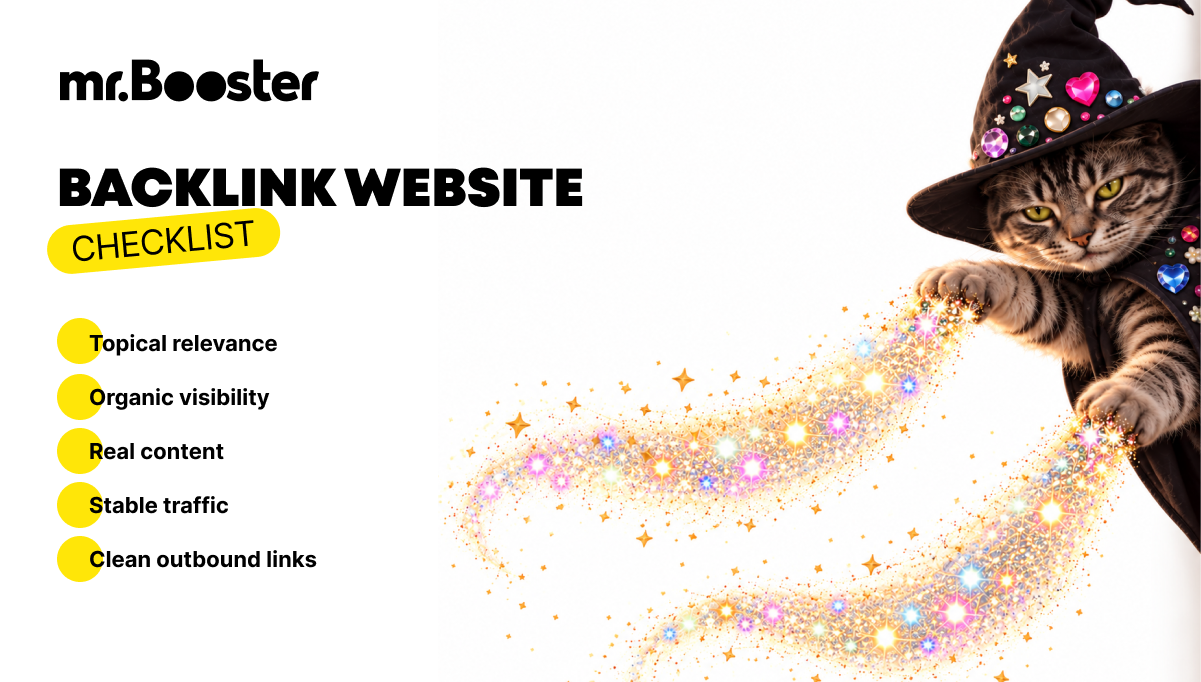
Quick checklist: how to choose the right backlink website? Check these:
- Topical relevance: Does their niche align with yours? A link from a food blog to an iGaming website looks unnatural and carries almost zero weight.
- Organic visibility: Does the website actually rank for its own keywords? If Google doesn’t trust it enough to show it in search results, its backlink won’t help you either.
- Publishing standards: Do they post high-quality, real content, or just cheap, mass-generated spam? If the site mainly exists to publish paid posts and links at scale, it’s a red flag.
- Traffic trends: Is their traffic stable and growing? Or does it have drops? Sometimes, a sudden, steep drop can mean the site was recently hit by a Google penalty.
- Existing outgoing links: Who else are they linking to? If they link to shady niches (like explicit content or prohibited goods) or clearly sell links to absolutely anyone, stay away.
And don’t rush it: gradual acquisition of trustworthy links is far safer and more valuable than an artificial spike in referring domains!
Strengthen brand authority and trust
Google “likes” and ranks websites that demonstrate credibility and expertise. By the way, your brand authority supports not only SEO performance, but also customer confidence.
The easiest way to start is to provide transparent company information through detailed pages, like About, Contact, Privacy Policy, and Terms. Visitors should be able to understand who operates the website and how to contact the business.
As for the content you publish in your blog or landing pages, make sure to include expert author profiles that describe relevant qualifications and professional experience. Case studies, customer reviews, and original research can provide additional evidence of reliability for your site.
Data-driven SEO performance improvement
Sustainable SEO requires continuous measurement rather than assumptions. No wild guesses, data only!
So use Google Search Console, Google Analytics 4, and other reliable third-party tools to monitor your organic clicks, impressions, click-through rates, keyword positions, conversions, indexed pages, and backlink growth. Separating branded and non-branded traffic can also reveal which areas of the strategy are producing results.
The smartest approach here is to evaluate performance over meaningful periods instead of reacting to daily ranking fluctuations. Strategy instead of tactics and wisdom instead of firefighting.
For example, consistent page-level analysis can identify content that receives many impressions but few clicks, loses traffic, or fails to generate conversions. These insights can guide title and meta description tests, content updates, internal linking improvements, and technical fixes. Check reports regularly and connect the dots to recognize negative trends early. Analyse trends, measure the impact of changes, and invest resources in actions that deliver sustainable growth.
What to Do If You Have Used Black-Hat SEO Before
Start with a full audit of your backlinks, content, redirects, indexed pages and technical setup. Identify which tactics were used, document the affected URLs and stop anything that is still active. Then remove or improve low-quality pages, undo manipulative redirects and clean up artificial links that you built or control.
Do not panic over every low-quality backlink pointing to your site. First, try to remove artificial links that were deliberately created to manipulate rankings and that you can reasonably have taken down. Use Google’s Disavow Links tool only if your site has received a manual action – or there is a genuine risk of one – and those links cannot be removed manually. If you do receive a manual action, fix the underlying issue before submitting a reconsideration request.
Recovery is rarely instant. Monitor visibility, indexing and conversions while you rebuild the site with useful content, sound technical SEO and legitimate link building.
Let’s put your SEO back on track. At mr.Booster, we handle everything from technical SEO and content to quality backlinks, SERM and brand protection. And no black magic SEO included.